under construction

under construction

January 28, 2013

For Starters...


Distinguished Georgia starting quarterbacks of the last 40 years:
The Winner (John Lastinger), The Ultimate Underdog (Jeff Pyburn),
and Mr. Perfect (Brian Smith)
Over the weekend, I heard some sports-talk radio hosts discussing the playoff success of Baltimore quarterback Joe Flacco entering the Super Bowl: the Ravens are 8-4 when Flacco starts at quarterback, they notably have the same record against the spread in those 12 games, and four of the eight victories have resulted when Baltimore was an underdog.

Perhaps file this with the for-what-it's-worth-probably-not-much posts, but I decided to find out the same for Georgia's starting quarterbacks beginning in 1973 (the year college football point spreads became relative to today's lines), figuring every quarterback's career starting record, their record when the Bulldogs entered as underdogs, and their starting record against the spread.  Plus, I've added a few historical notations along the way.

I realize a quarterback's record as a starter does not fully equate to his overall value; far from it, in fact, in some instances.  However, there is some value in whether a player directly guided his team under center to a win, or a loss.  This was especially the case recently when we heard the outcry of "Aaron Murray (the team's quarterback, as we all know) can't win the big game."  In addition, these rankings are somewhat appropriate since there is a minor but prevailing discrepancy with which actual Georgia quarterback has the best career starting record.

––Of the 28 Georgia quarterbacks to have started in the 40-season period from 1973 through 2012, seventeen started at least 10 games for their careers.  Below, these 17 are ranked according to their starting winning percentage, followed by career record in the seasons they started for the Bulldogs.  As indicated, I began with 1973 because that was the initial season computers were used to help determine college football point spreads and, according to a guy I know at The GoldSheet, any line in the sport prior to 1973 has "little relation" to today's college football point spreads.  However, if the lines prior to '73 aren't considered, the first two seasons of the great ANDY JOHNSON are not recognized.  Therefore, for the following analysis, I used "nonrelative" Las Vegas odds from 1971 and 1972 simply so Johnson's career starting record against the spread would be a complete one.

Starting Winning Percentage
.891  John Lastinger (20-2-1 in '82-'83)
.871  Buck Belue (27-4 in '79-'81)
.833  DJ Shockley (10-2 in '05)
.808  David Greene (42-10 in '01-'04)
.794  Matt Stafford (27-7 in '06-'08)
.783  Ray Goff (18-5 in '75-'76)
.778  Wayne Johnson (14-4 in '85-'88)
.750  Andy Johnson (23-7-2 in '71-'73)
.710  Quincy Carter (22-9 in '98-'00)
.683  Aaron Murray (28-13 in '10-'12)
.667  James Jackson (19-9-2 in '85-'87)
.646  Eric Zeier (26-14-1 in '91-'94)
.646  Jeff Pyburn (15-8-1 in '77-'79)
.643  Joe Cox (9-5 in '06, '09)
.615  Mike Bobo (16-10 in '95-'97)
.545  Matt Robinson (6-5 in '74-'75)
.520  Greg Talley (13-12 in '89-'91)

––Here's the discrepancy: Officially, BUCK BELUE has a 27-3 career record; that is what's listed in Georgia's records along with what's in the NCAA record book (which likely acquired the record directly from UGA).  And, a 27-3 mark is a .900 winning percentage, or just better than JOHN LASTINGER, which would claim the top stop among Georgia's starting quarterbacks.  However, Belue started games four through ten of the '79 season, in which Georgia had a 5-2 record, and all 12 games in both 1980 (12-0 record) and 1981 (10-2).  Either my calculator is broken or Belue had an "unofficial" career starting record of 27-4, and not the official 27-3 mark.  Perhaps where the discrepancy lies is the meeting with Auburn in 1979 – a game in which Belue started but appeared for only a single play (a two-yard loss after being sacked in his own end zone, yielding an Auburn safety while suffering a broken ankle).  Nevertheless, according to the NCAA, a quarterback is considered having started a game if he simply takes his team's first offensive snap.  Therefore, a seemingly slight oversight has given credit where it wasn't due, handing JEFF PYBURN a losing start while enabling Belue to sit atop the "official" chart.
Seemingly, a bum ankle vs. Auburn in '79 determined 
passing the buck of a starting loss for Belue.

RECORDS of UGA Quarterbacks with Less than 10 Starts (chronological order): Dicky Clark 1-1; Randy Cook 0-2; Steve Rogers 0-1; Todd Williams 5-3-1; David Dukes 3-1; Preston Jones 1-1; Joe Dupree 0-1; Brian Smith 4-0; Hines Ward 1-4; Cory Phillips 3-2; Joe Tereshinski 2-3

––Filling in for Mike Bobo in 1996, and Bobo and Hines Ward the year before, BRIAN SMITH started only four games his entire career: Clemson, Vanderbilt, and Kentucky in '95, and Auburn in '96.  However, Smith won all four games, including two in which Georgia entered as underdogs (Clemson and Auburn), while the Bulldogs covered each contest, as well.  Granted, the final start against Auburn by Georgia's "Mr. Perfect" is worthy of an asterisk since Smith was benched late in the second quarter with Georgia trailing by three touchdowns before Bobo rallied the team in a four-overtime victory.  Nonetheless, a start is a start... 
 
Top 5 Against the Spread
.667  Ray Goff (14-7-1 ATS)
.630  Buck Belue (17-10-3 ATS)
.600  Matt Robinson (6-4 ATS)
.588  Wayne Johnson (10-7 ATS)
.560  David Greene (28-22 ATS)
 
Under .500 Against the Spread
.348  Jeff Pyburn (8-15-1 ATS)
.357  Joe Cox (5-9 ATS)
.400  Greg Talley (10-15 ATS)
.448  James Jackson (13-16 ATS)

––Of the 17 Georgia quarterbacks to have started 10+ games, notably, only four have a record against the spread under .500.  Bringing up the rear is JEFF PYBURN, who covered just one-third of his 24 career starts.  However, Pyburn is remarkably Georgia's leader with five wins (and only three losses) as a starter when the Bulldogs were dubbed underdogs (South Carolina in '77, Baylor, Clemson, and LSU in '78, and Georgia Tech in '79).  Therefore, if you're keeping up at home, you'll figure that when Pyburn started and Georgia was favored, any wager placed on the Bulldogs was a near-guaranteed loss; the Bulldogs covered just three of 16 games in such circumstances.   
 
Most Wins as an Underdog (number of losses)
5- Jeff Pyburn (3)
4- Buck Belue (0)
4- Matt Stafford (2)
4- David Greene (5)

––In the five games HINES WARD started at quarterback while a Bulldog – all occurring in his sophomore season of 1995 – Georgia entered as an underdog for all five (Alabama, Florida, Auburn, Georgia Tech, and Virginia in the Peach Bowl).  In comparison, of the Bulldogs' seven other games that season, only once did the team enter as the underdog.
 
Bottom 5 in Underdog Win Percentage (at least 4 games)
.111  Aaron Murray (1-8 UND)
.200  Hines Ward (1-4 UND)
.250  Eric Zeier (2-7-1 UND)
.333  James Jackson (2-4 UND)
.333  Mike Bobo (2-4 UND)

––Of the 113 games Georgia entered as underdogs from 1973 to 2009, only 55.8 percent of the time the Bulldogs would actually lose the game, including an excellent 12-12 underdog record during that time under Mark Richt.  In sharp contrast, over the last three seasons under Richt and with AARON MURRAY starting under center, Georgia is a lowly 1-8 as an underdog.  Over the last 40 years (and likely much longer), never have the Bulldogs experienced such a dismal stretch in games they were supposed to lose.  Still, in looking at the upcoming 2013 schedule, I spot at least two, and maybe as many as four, regular-season foes that will probably be favored over Georgia.  Therefore, Murray should have ample opportunity to improve upon his underdog and "big game" mark.

January 21, 2013

UGA's Version of a Football Player–Girl Hoax


A hoax on UGA's Dick Richardson in 1942...
As I, like many of you, continued to scratch my head during the weekend over the Manti Te'o girlfriend hoax, I pleasantly recalled a story a member of Georgia's 1942 Rose Bowl team told me when I interviewed him several years ago.  Although newsworthy at the time, the incident from exactly seven decades ago wasn't nearly as scandalous as today's Te'o tale, nor as entertaining, but an innocent account of a hoax involving a Bulldog player and an "untouchable" girl that had a happy ending.

Remembering what the former player mentioned to me, plus some old articles I recently discovered, here's the story of the "girl" hoax on the Georgia Bulldog that backfired:

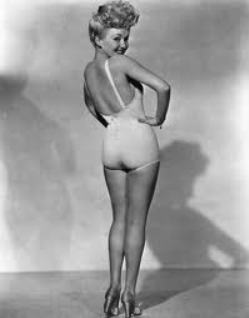
Sophomore Dick Richardson was a 6-foot-3, 200-pound key reserve tackle on the '42 championship team and a member of the university's Sigma Alpha Epsilon fraternity.  Following the Bulldogs' regular season and before the team was to venture to the Rose Bowl, a telegram from Athens signed by Richardson and with the return address of the SAE house was sent to renowned Hollywood actress Betty Grable – "the darling of the forties." 
 
Richardson's telegram stated: "I am a tackle on the University of Georgia Rose Bowl team.  I was recently chosen the most handsome man on the campus.  Would like a luncheon date with you at your convenience some time between December 23 and January 3.  If it can be arranged please answer collect."

Instead of the telegram being ignored, which is what usually resulted with such requests, the PR department of 20th Century Fox contacted the Atlanta media, which in turn reached out to Richardson, who, in reality, had made no attempt to contact Grable.
...got the lineman a date with "the girl
with the million dollar legs."

"Nope, I didn't send [the telegram]," Richardson told a news reporter.   "Must have been some of the fellows around [the SAE house].  They're mighty playful at times."

The reporter asked Richardson what if by chance the actress agreed to a date based upon the bogus invitation.  "I will be glad to take her to dinner if she can go," Richardson responded. 
 
"Would you miss the game to take Miss Grable out?" the reporter followed up.  Curiously, there was no response from Richardson in regards to missing the Rose Bowl for a date with the number-one pin-up girl during World War II.

In what was described as a hoax gone good, Grable made national news by replying to the phony wire and accepting the date.  While the Bulldogs were in the Los Angeles area preparing to face UCLA on January 1st, Richardson and Grable ate lunch together four days prior to the game and then she personally gave the Bulldog lineman a tour of a Hollywood studio.  Concluding the date, she also gave Richardson "a great big kiss," which I'm guessing was actually a rather big deal back then compared to how it seems today.

After their kiss, Richardson said to Grable, "this will be something to tell my grandchildren."  In response, the buxom blonde quipped, "What!  Don't tell me you have grandchildren!"

Richardson's Hollywood fairy tale didn't end with the Rose Bowl and the story would have a happy ending.  Following the Bulldogs' trip out West, Grable actually invited him to return to California at a later date for a screen test.  There's no mention if any kind of relationship ever developed between the two.  Regardless, several years later, the former Georgia football player would marry Virginia Stewart – a Chi Omega at UGA.
 
Ahhh, a feel-good story from what has been recognized as our country's "Greatest Generation," and a sharp contrast to Notre Dame's account 70 years later of a hoax involving a football player and his love interest.

Speaking of Te'o, if not possessing even worse character flaws, he's extremely naive and delusional at the very least.  Personally, I agree with what I heard Charles Barkley (of all people) say a few days ago: I kind of feel "sad" for Te'o, and unlike Georgia's, Notre Dame's version of a football player, a girl, and a hoax is probably "not going to end good."

January 10, 2013

"Hey, James Brown... Sing that Junkyard Dog Thing!"

Six months ago, I blogged about how I had been generously given the Bulldog radio broadcast of the 1975 Georgia-Florida game, and posted the last 26 minutes of the broadcast.  As I stated then:

For most of us Bulldog enthusiasts, the lone moment we've heard from the broadcast is the great Richard Appleby-to-Gene Washington 80-yard touchdown pass, which "won" Georgia the game. However, as I've mentioned here a couple of times before, there was a ton of time remaining after the memorable end-around touchdown play. The Gators would have possession of the ball TWICE more and even made a game-tying field-goal attempt with nearly one minute left.
 
Recently, I was handed another Georgia football treasure: coaches film from that same game.  The individual that sent me the film was actually one of the Bulldogs' 11 offensive players on the field when Appleby threw to Washington.  I have made an attempt to mix Munson's broadcast with my edited version of the film, plus added a little cheesy commentary, to bring what ranks as one of the most exciting final few minutes in UGA football history:  
 

January 4, 2013

Best Bulldogs' Team of All Time?


Despite two losses, the '81 Bulldogs rank as one
of the best UGA football teams of all time...
What is the best Georgia football team of all time?  It's a question thrown my way every so often, and one that's always rather difficult for me to answer.  In fact, for all the times I've been asked the question, the answer I've likely given the most is one of uncertainty. 

Unlike for some football programs, the answer to what is the greatest Bulldog football team in history, for various reasons, is not so cut and dry.
 
I received an email from a reader yesterday, mentioning that it appears the Bulldogs will finish this season ranked in the final AP Poll's top five for the 10th time in the program's history.  So, with that being said, the reader asked, "is this year's Bulldogs' team one of UGA football's top ten best of all time" in my opinion?
 
There was little hesitation in my response – No.  For one, Georgia played football for about 40 years and had several outstanding teams before the first AP rankings of 1934.  Nevertheless, after a fine 12-2 season, the question can be asked regarding if the 2012 Bulldogs rank among the best teams ever at the school.  And, above all, what season's football team is the best in school history?
 
For what it's worth, this morning I compiled my opinion of the top UGA football teams of all time.  Notably, it's obviously difficult to compare teams of the modern era to ones from yesteryear; Georgia's best Red and Black squads from long ago would likely lose to most single-A high school teams of today.  Therefore, all Georgia teams were evaluated based on their accomplishments in relation to their respective eras.
 
With this season's Georgia team coming in at No. 20, my top 20 Bulldogs' football teams of all time (including one when  Georgia was yet to be known as the "Bulldogs"), along with each season's record and an explanation as to why each is ranked higher, or lower than one might think:
 
# 1- 1946 (11-0)
The Bulldogs' first of only two perfect teams, which faced more than four opponents, not only outscored the opposition by nearly four touchdowns per game, but was really never threatened.  Georgia's smallest margin of victory was 10 points against UNC in the Sugar Bowl.
    
# 2- 1981 (10-2)
I've always argued that the best of Georgia's four great teams from 1980 to 1983 was the one with the worst record.  Statistically, the '81 Dawgs were by far the best of the four.  I recently asked a member of the 1980 and 1981 teams which of the two was the best (and, even though only a year separated them, the two teams were very much different as just six of 24 starters from the '80 team would be considered starters in '81).  "I'll put it this way," the player told me,  "if the 1980 and 1981 teams played one another 10 times, the '81 team would win 11 of them."
    
# 3- 1942 (11-1)
Some old-timers contend that the '42 team – one which earned the first of Georgia's two consensus national championships – perhaps is the best ever at the school, and likely even better than the '46 squad.  However, it's hard to look past a one-point win in the season opener against a Kentucky team that would finish with a 3-6-1 record and a two-touchdown upset loss to a 6-4-1 Auburn squad.
 
# 4- 1968 (8-1-2)
Despite winning just eight of 11 games, the Bulldogs were acknowledged as the top team in the country by the NCAA-recognized Litkenhous rankings – a computer rating-based poll.  In addition, the erroneous tie against Tennessee should have actually been a Georgia victory, while the Bulldogs clearly didn't give their all in a 14-point loss to Arkansas in New Orleans. 
 
# 5- 1927 (9-1)
Dominant for first nine games of season, Georgia handed Yale its only loss of the year while outscoring the other eight foes by an average score of 29 to 2.  The '27 team was headed for a Rose Bowl and likely the distinction of being one of the best teams in the history of college football before an inferior Tech squad pulled the upset of all upsets with a 12-0 win.

However, in my opinion, no Georgia team can quite
compare to Charley Trippi and the rest of the '46 Dogs.
# 6- 1920 (8-0-1)
Only a 0-0 draw with a much-acclaimed Virginia team kept the 1920 Wildcats-turned-Bulldogs from being perfect.  Besides the tie, Georgia did escape with three victories of seven points or less; however, those three wins came against teams (Furman, Auburn, Alabama) which had a combined record of 26-1 against opponents other than Georgia.
 
# 7- 1980 (12-0)
How can Georgia's undefeated, untied, and "undisputed," as Coach Dooley likes to put it, national championship team of 1980 be only the 7th best in school history?  Easy.  Take a look at that team's schedule and the fact that no regular-season opponent finished ranked in the AP Poll or with a record of better than 8-4.  And, against the weak slate, half of the Bulldogs' 12 victories were by a touchdown or less.  More telling, because of the low scoring margin against such an easy schedule, the final New York Times computer poll ranked the "undisputed" Bulldogs a lowly seventh in the nation, including behind even a couple of 10-2 teams.
 
# 8- 2002 (13-1)
One of fans' favorite Georgia teams in recent memory got off to a winning but rocky start with close victories over Clemson and South Carolina.  Nevertheless, by the end of the season, the Bulldogs were arguably the best team in the nation and very well could have defeated Ohio State or Miami for the national title.  However, because of an earlier upset loss to 5-3 and unranked Florida, Georgia didn't even get a shot at the championship.
 
# 9- 1992 (10-2)
Eerily similar to the '81 Bulldogs, the Georgia team 11 years later seemed absolutely dominant statistically and "on paper" despite losers of two close games.  Of nine regular-season victories, only one was by less than 10 points.  It's too bad the Bulldogs couldn't come out on top in just one of their two losses – Tennessee by three points, Florida by four points.  If so, Georgia would have played in the first SEC title game and, in my opinion, would have probably defeated Alabama, sending the Dogs to the Sugar Bowl for a shot at a national championship.
 
#10- 1971 (11-1)
Outscoring the opposition by an average 34-to-6 score, the '71 Bulldogs are perhaps the program's best team through the first nine games of a season.  However, according to a player from that season, "entering the Auburn game, we were beginning to run out of gas."  In the much-anticipated battle of the undefeateds, three-point favorite Georgia lost to the Tigers by 15 at home!  And then followed it up with mere four-point victories over Tech and UNC (Gator Bowl) after the Bulldogs entered each contest as double-digit favorites.
 
#11- 1982 (11-1): Many close calls during perfect regular season; 11-0 could have just as easily been 7-4.
#12- 1931 (8-2): In late October was recognized by a Los Angeles newspaper as best team in all of college football...Two losses (Tulane, Southern Cal) were to the teams which eventually played in Rose Bowl for national championship.  
#13- 1976 (10-2): Perhaps my favorite Georgia team of all time was rather dominant in each of its victories; however, its two losses to a 5-6 Ole Miss squad and by 24 points to Pitt in the Sugar Bowl were bad losses. 
#14- 1966 (10-1): Lone loss to unranked Miami, while average scoring margin was a comparatively low 12.5 points per game.  
#15- 1945 (9-2): Charley Trippi returns from military service and Georgia is inexplicably embarrassed in consecutive games against LSU and Alabama by a combined 60-14 score.  However, Trippi and the Bulldogs rebound to outscore final five opponents by an average margin of 29 points.
#16- 1983 (10-1-1): Another fan favorite was behind or tied more often than not, but still found a way to lose only one game.  The one loss – Auburn by 13-7 score at home – was much more lopsided than result indicates, while proving there was no question who was the best team in the SEC in '83.  
#17- 1948 (9-2): Without a Frank Sinkwich or a Trippi, the '48 Bulldogs are the forgotten SEC title team of the '40s.  Lack of running game proves costly in setback to UNC (28 rush. yds) and in upset loss to Texas in Cotton Bowl (56 rush. yds).
#18- 2007 (11-2): Yes, a second-place finish in the final AP Poll; however, it comes following two losses, including one by three touchdowns in Knoxville.  And, instead of a win over Hawaii in the Sugar Bowl, I've wondered before what would've been Georgia's bowl result if it rightfully faced USC in the Rose Bowl instead? 
#19- 1913 (6-2): Six victories, including over prominent Alabama and Georgia Tech teams, by an average winning margin of 35 points...Two losses to Virginia and Auburn, who combined to record 15-1 mark.
#20- 2012 (12-2): Will be remembered for 12 victories for only the third time in school history, a top five finish, and being just a few yards from playing for a national championship...Will also be remembered for a Capital One Bowl postseason, an underachieving defense which allowed roughly 20 points and 360 yards per game, and a four-touchdown blowout loss in Columbia.
 
Just Missed Top 20: 1921 (7-2-1); 1941 (9-1-1); 1959 (10-1); 2003 (11-3)

December 29, 2012

GRANTHAM vs. WILLIE MO

A heated topic of conversation among some family members of mine on Christmas Day was Georgia's overall defensive effort this season, considering its perceived collective talent level.  After I noted the Bulldogs' current and unheard of streak of allowing three consecutive opponents to rush for 300+ yards, a relative quipped, "And just imagine how many yards Georgia would be allowing if 'Willie Mo' was still the defensive coordinator instead of Grantham."
 
Ah, Willie Mo, or Willie Martinez...  I hadn't associated the name with the UGA football program since I, along with most of the Bulldog Nation, breathed a sigh of relief upon his firing in early December of 2009.  Recalling Martinez's tenure as defensive coordinator – a five-year stint of seemingly a steady decline in defensive performance with each passing season – and the Bulldogs' disappointing defensive play in 2012 invoked a question of whether or not Georgia's defense had actually performed better under Grantham compared to the final few seasons coordinated by Martinez.
 
In the past, I've compared the Bulldogs' offensive production statistics of when Mark Richt was calling the plays to that of Mike Bobo.  I decided to make a similar comparison, examining Georgia's defense in the three seasons under Grantham (2010-2012) to that of Martinez's final three years as the Bulldog DC (2007 through 2009 regular season).

A quick look at the numbers reveals the 40-game Grantham regime having a slight edge in fewest total yards allowed per game (TG- 318.0; WM- 321.0) and yards yielded per play (TG- 4.92; WM- 4.96).  In the 38 games under Martinez, Georgia did total more sacks per game (WM- 2.45; TG- 2.15).  But above all, the Bulldogs under Grantham had the advantage in the two most important defensive categories of those considered: turnovers forced (TG- 2.13; WM- 1.37) and offensive touchdowns allowed (TG- 2.33; WM- 2.71) per game.

However, there is an existing perception that Grantham's defenses normally play quite well when pitted against average to lower-tier offenses; however, Grantham's troops have often had their struggles in stopping productive offenses.

Therefore, believing it would be a better comparison of the effectiveness of their defensive units, I compared the two coordinators when only faced with an offense that would finish its respective season ranked in the nation's top 50 in total offense, or slightly better than the top half of the approximately 120 FBS teams (current total offense rankings were considered for Grantham in 2012).  During the three-season periods, both coordinators faced a top-50 offense roughly one third of the time (Martinez- 12 games; Grantham- 13 games). 

For what the comparison is worth, which might be little, its results were rather one sided and a little surprising to me (PG= per game; Three-and-Outs %= the percentage of the opposition's offensive possessions which resulted in a punt or turnover in one to three plays):
  
                                             WM         TG
Total Yards PG:                        363.5     407.4
Yards Per Rush:                     3.8        4.4
Yards Per Pass:                     7.5         7.9
Yards Per Play:                      5.5        5.7
Off. Touchdowns PG:              3.3        3.5
Sacks PG:                                    3.1        1.5
Turnovers Forced PG:            1.8         2.2
3rd Down %:                         37.7       46.4
3rd + 4th Down %:              37.3       46.3
Pts Per Red Zone Visit:            4.5         5.2
Three-and-Outs %:             25.9       26.1

Against offenses I defined as productive, Grantham's defenses forced a few more turnovers and had the slightest edge in three-and-out percentage.  However, Georgia's defenses from 2007 to 2009 performed better in every other category, particularly in yards allowed (nearly 45 less per game), yards per rush (more than a half-yard difference), sacks (twice as many), and 3rd/4th-down conversions (nearly a 10% difference).

As was the case with my Richt vs. Bobo comparison, I realize simply comparing statistics doesn't reveal the entire story, so to speak, especially when considering merely 12 or 13 games.  Personally, I prefer Todd Grantham over Willie Martinez as Georgia's DC on any day and against any offense, whether productive or one not so much.  However, what is evident is that Grantham's defenses have overall performed at a sub-par level against efficient offenses.  Apparently, this is especially the case even when compared to the final three seasons of Willie Mo's tenure.

Perhaps most telling, Georgia's record is 7-6 when Grantham's defensive unit has faced a top-50 offense; the Bulldogs were 9-3 in the 12 games with Martinez under the same circumstances from 2007 to 2009. 

Let me add, the Bulldogs will face the FBS' 24th-ranked offense (8th in rushing offense!) in a few days down in the Capital One Bowl.  Let's hope the performance by Grantham's defenders against Nebraska coincides with the viewed collective talent level of the defense, and any perception of Georgia having struggles in stopping productive offenses is at least put on hold.

December 24, 2012

Final Game Footage

'Tis the season, so my posts have been somewhat limited of late.  However, I did find time to discover some historic Bulldog-related videos, none of which I had ever seen, including rare color footage from the Orange Bowl of more than 60 years ago. 

With Georgia's final game of the 2012 season looming, I cut the footage a bit to display some Bulldogs at their best in the final games of their respective years:

1949 ORANGE BOWL vs. TEXAS

 
Georgia entered the 1949 Orange Bowl losers of just one game during its regular season en route to capturing an SEC championship.  On the contrary, Texas had finished its '48 campaign with only six wins in 10 games, were called a "third-rate team" by some Miami sports writers, and entered the bowl as heavy underdogs to the Bulldogs.

The silent coaches film displays the game's opening kickoff, which was fumbled by Georgia's first-string fullback, John Tillitski, and recovered by Texas' Randall Clay.  After the Longhorns ran a play and then committed a penalty, quarterback Paul Campbell was intercepted in the flat by the Bulldogs' second-string fullback, Al Bodine.  Bodine, a senior playing in his final game, lumbered for a 73-yard touchdown, causing the 1949 Orange Bowl to begin with quite a bang for the Bulldogs.

Alas, led by the rushing of eventual NFL coaching legend Tom Landry, Texas would soon take command of the game and upset the Bulldogs in the end, 41-28.  For what it's worth and for Bodine, whose only other interception at Georgia was returned for a 39-yard touchdown against Furman in 1947, the lumbering fullback remains the only Bulldog in history to tally touchdowns for each one of his interceptions with a minimum of two career picks.

1957: "THE DROUGHT BREAKER" vs. TECH


What is often lost in recalling fullback Theron Sapp's drought-breaking touchdown against Georgia Tech in 1957 is that it was Sapp, who not only capped the historic scoring drive, but playing linebacker on defense, started it, as well.

Following Sapp's third-quarter fumble recovery at the 50-yard line in a scoreless tie, Georgia ran the ball five consecutive times for just 11 yards.  Facing 3rd and 12 and the fact that the Bulldogs had completed just 40 passes all year, including NONE thus far in the game, Charley Britt connected with Jimmy Orr for an improbable and critical first down to the Jackets' 26-yard line.  From there, Sapp carried six straight times for 25 yards.  After Britt was stopped for no gain, Sapp crashed off his right side into the end zone for the celebrated touchdown and immortality.

Sapp's game-changing fumble recovery, nine carries for 34 hard-earned yards on the game-winning drive, and 1-yard drought-breaking touchdown snapped Tech's eight-game winning streak over Georgia with a 7-0 Bulldogs' victory.  In addition, it represents likely the only time in the history of college football that an individual jersey number was retired (Sapp's No. 40) primarily based on merely a six- or seven-minute performance in a single game.

1982: "BOCA" vs. FSU


Who knew Coach Richt could escape a sack a la Randall Cunningham?  As evident by his minus-42 career rushing yards on 72 rushes while at Miami, the Hurricane quarterback was far from mobile; however, at least against 14th-ranked Florida State in late-October of 1982, the Boca Raton native had all the right moves.

Richt has said that one of his goals upon signing with Miami out of high school was to be "the Heisman Trophy winner my third year."  Instead, by his third year at Miami, the once highly-recruited Richt, who had been nicknamed "Boca" by this time, had yet to start even a single collegiate game.  Nevertheless, once future Pro Football Hall of Famer Jim Kelly went down with an injury in the third game of the '82 season, the Hurricane starting job was Richt's to lose. 

With Richt under center, Miami won three of four games and entered its game against the Seminoles ranked 16th in the nation.  Unfortunately, despite 273 passing yards from Richt, the 'Canes fell to the 'Noles, 24-7.  A couple days later, Richt lost the starting job when he was issued a one-game suspension for a dorm violation. When he returned to the team with two games remaining, the senior had been placed behind freshmen quarterbacks Kyle Vanderwende and Vinny Testaverde. 

Richt would never take another snap from center, establishing that Boca's performance against FSU in '82 was the final game for the Bulldog-to-be.

December 18, 2012

Christmas Came Early

Hugh at Georgia's Picture Day in 1974
A few months ago, I posted a piece on my moving and unforgettable visit with the parents of Georgia football player Hugh Hendrix.
 
As I've indicated a few times here before, Hugh was an intelligent, straight-laced individual and the "most likable player on the team," who was projected to start at offensive guard in 1976 as a senior after starting the latter half of the 1975 season.  Two months prior to the season opener, Hugh passed away from a rare blood infection within a week of merely exhibiting flu-like symptoms.  To this day, the actual cause of his fatal infection is a medical mystery.
 
In memory of Hugh, the team dedicated its '76 season to their fallen teammate.  A decal – Hugh's jersey No. 64 – was placed on the Bulldogs' helmets; the first time Georgia ever featured a helmet sticker in honor of someone or something.  Inspired by Hugh, the Bulldogs would go on to capture an SEC championship.
 
In short, I visited the home of Harvey and Carolyn Hendrix back in September along with a teammate of Hugh's at Georgia and a couple of his childhood friends.  During the visit, Carolyn asked me if I knew whether or not the UGA football program still gave out her son's award – the Hugh Hendrix Memorial Award, which was annually awarded to the Bulldog player who "most strained his potential."

Come to find out, Hugh's award was given from 1976 through 1989, resumed for one year in 1992, and then was discontinued for reasons unknown.  I suddenly felt compelled to begin a pursuit to reestablish what had been discontinued, and said then:
 
Hugh Hendrix touched many people in life, just after his passing, and continues to do so to this day, including yours truly when I visited his parents and later stood over his grave last week. If there ever was a Bulldog player who deserved a team award in his honor for being the ultimate teammate and one who strained his potential, it is undoubtedly Hugh. The football program honored him before; it should do so again!
 
Within 15 minutes of my posting three months ago, I received an email from an Athletic Board member with a suggestion on how I could go about getting the award reestablished.  Within 48 hours of the post, I had received over 30 emails of kind words, advice, and even a few from individuals wanting to donate money to the cause.

I was truly taken aback by the amount of support from the readers of this blog.

I decided that the best route to take was to first send a letter to Greg McGarity, and then go from there.  Only two days after mailing my letter, I received a response from the AD, indicating that the athletic department was going to look into why the award was discontinued and they'd be in touch with me.

Late last week, I received an email from another prominent member of the athletic department.  After just 10 weeks since my email from McGarity, I was thrilled to read: "We are going to reestablish Hugh’s award. We are in the process of getting this done."

I soon contacted Harvey and Carolyn with the good news.  I had not previously communicated with them the efforts to reestablish the award, and didn't want them to be totally taken off guard if ever contacted by the athletic department.

Hugh with teammates Dave Christianson (No. 81),
Bubba Wilson (No. 30), and Steve Davis (No. 14) --
Photos courtesy of Hugh's friends Janice Henck & Kathy Wicks Kelley
Hugh's parents were extremely happy and appreciative that the UGA football program would continue to remember their son 36 years after his death.  "Tell everyone involved 'thank you so much' from the two of us," Carolyn said to me.  "We have been given an early Christmas gift!"
 
I concur.  With the news from the athletic department, my household received an early Christmas gift, as well.

But, why was the award discontinued to begin with?  Besides "what can I do to help?" it was the question most asked in the emails I received.
 
I don't know why the award was interrupted 20 years ago, and really don't care.  Perhaps the current regime in the athletic department doesn't even know the reason.  I can only speculate that unfortunately Hugh's award was grouped with others not associated with financial backing or a scholarship back in the early-90s, and was dropped.
 
Nevertheless, it appears what was once mysteriously interrupted will be rightfully continued.  Therefore, the question that should be asked regarding the Hugh Hendrix Memorial Award is not why, but who...
 
Who amongst the current edition of Bulldogs is worthy enough to receive such an honor?

December 13, 2012

Bulldog Legend Dispelled (kind of)

Jake Scott flies to the defender during the '69
Sugar Bowl (the day after flying out a window?)
By the end of their regular season, the 1968 Bulldogs were considered perhaps the greatest football team in the program's history; even better than the 1920 undefeated S.I.A.A. championship team, the 1942 consensus national title squad, the perfect 11-0 Bulldogs of 1946, you name it.

Georgia was expected to easily handle Arkansas in the Sugar Bowl on January 1st.  The Hogs weren't even the best team in their conference that year, and they'd be facing maybe the greatest Bulldog team of all time?

The matchup seemed hardly fair.

Nevertheless, Georgia committed eight turnovers on a chilly day in New Orleans and were upset by the Razorbacks, 16-2.
 
I recently sat down with a prominent member of that '68 Bulldog team, and I just had to ask him: What happened in that Sugar Bowl game, and are the rumors true about the Bulldogs excessively partying the night before the game?
 
The stories of Georgia in New Orleans on New Year's Eve of 1968 have become near legendary, while helping explain why the team played so poorly the following day.  Among many others, Bill King of the Junkyard Blawg recently recognized the partying in a piece he did on Jake Scott a couple of years ago. 
 
One of the original books on UGA football – Jesse Outlar's Between the Hedges from 1974 – even acknowledged the carousing with a joke: A New Orleans taxi driver attempted to cheer up a group of saddened Bulldog followers following the loss to Arkansas.  He said with a straight face, "I don’t understand what happened to that Georgia team.   When I brought several of them to the hotel at 2 a.m. this morning, they told me there was no way they could lose to Arkansas."
 
When the Bulldogs were preparing to face Pittsburgh in the 1977 Sugar Bowl, Coach Vince Dooley issued a strict curfew on his team for the entire week leading up to the game.  Seemingly, he had learned his lesson from eight years before: "It's been my experience any team that has ever gone to New Orleans and lost spent too much time on Bourbon Street," said Dooley the week of the game.
 
In Tony Barnhart's What It Means to Be a Bulldog from 2004, the '68 Georgia starting quarterback, Mike Cavan, brings up the rumor of he, Scott, and fullback Brad Johnson being on Bourbon Street the night before the game until 4:00 AM: "Let's get the record straight...I can't speak for Brad or Jake, but I was in my room..." says Cavan.
 
Concerning the rumors of excessive partying prior to the Sugar Bowl, the '68 player, who was very forthright during our interview, summed it up as "all nonsense."
 
The player said that Coach Dooley would say prior to every game that there would be only a few game-winning or game-changing plays that would transpire and be the difference between which team was about to win and which would soon lose, whether the final result was close or a rout.
 
"Dooley would say that we had to expect every play to be one of these possible 'game-winning' plays; therefore, we needed to give it our all on every play," said the player.
 
Apparently in the '69 Sugar Bowl, the Razorbacks had a number of game-changing plays, whereas the Bulldogs had just one.  Trailing 10-2, Georgia recovered an Arkansas fumble on the kickoff to start the second half.  Looking to tie the game, the Bulldogs moved 18 yards in five plays.  Facing 3rd and goal from the Hogs' 2-yard line, Georgia's game-changing play ensued:


According to the player, Dooley always said that if a team physically dominates a football game, odds are it'll likely win.  If it successfully executes more game-winning plays than its opponent, it'll definitely win.  In the '69 Sugar Bowl, Georgia physically dominated Arkansas but didn't execute its lone game-changing play.  Evidently, that's why the Bulldogs lost, not because of staying out late in the Big Easy.
 
"After the game, I overheard an Arkansas player say that he couldn't believe they got their ass kicked by us, but they still won the game," said the player.
 
But what about the rumored partying from the night before?  Were there players out and enjoying New Orleans into the early morning?
 
"From what I know, the entire team was shut up in the hotel and couldn't get out," said the player.  
 
In fact, this particular Bulldog tried to get ice on his floor; the machine was broken.  He tried to get ice on a different floor of the hotel, but couldn't because security wouldn't allow players to leave their respective floors.  "There were police at every exit," he added.
 
"If players got out on Bourbon Street that night, they must have flown out the window to get there," said the player.  He continued with a laugh, "Now, I will say that Jake Scott was smart enough that he might have brought a police uniform on the trip to escape."
 
That, or knowing what is rumored regarding the legendary Scott, he literally flew out the window...

December 7, 2012

Should've, Would've, Could've

When the 78th Heisman Trophy is handed out tomorrow night, history likely will be made in college football – for the first time, a freshman will take home the coveted award.  However, 32 years before there was "Johnny Football," another freshman – and a true freshman, at that – should've received the trophy, and would've if the same voting mindset, but mostly the voting deadline of today prevailed in 1980.
 
A little over a week ago, I simply shook my head when I heard Kirk Herbstreit's televised plea to Heisman voters: "I keep encouraging everybody, if you’re going to not vote for Johnny [Manziel], if it’s on his ability or his game or his season, that’s fine," said the ESPN college football analyst. "But let’s avoid not voting for him because he’s a freshman. That’s crazy."
 
My, how times have changed.  What is now crazy was once the mindset of many Heisman Trophy voters.  Herschel Walker could've won the Heisman Trophy in 1980 if he had not been a freshman.  However, as declared in the media back then only days leading up to the award's presentation, "because [South Carolina's George] Rogers is a senior he is considered the frontrunner" and "Rogers' status as a senior gives him the edge over Herschel Walker."
 
Notably, what should have given Herschel the edge over Rogers was the fact that when the two faced head-to-head on November 1st, Georgia defeated South Carolina 13-10, while the eventual 3rd-place Heisman finisher outgained the eventual winner 219 rushing yards to 168.  In addition, Rogers lost a critical fumble in Bulldog territory late in the game, costing the Gamecocks a victory.
 
But more so than Walker or Rogers' class status, by Friday, November 28th – the day Heisman ballots were due – Rogers held the ultimate edge because the senior's regular season was all wrapped up.  Herschel, on the other hand, and his Bulldog teammates still had one game remaining on their regular-season schedule against Georgia Tech the very next day. 
 
Herschel Walker might have won the Heisman in 1980 if all voters felt freely to vote for a freshman, but he most likely would've captured the award if his entire regular season was considered by voters, whether he was a freshman or otherwise.
 
Against the Yellow Jackets, Herschel rushed for 205 yards on 25 carries and three touchdowns in a 38-20 Georgia victory.  With 9:30 remaining in the game, Walker broke off a 65-yard touchdown run — his seventh run of 48 yards or more that season—and in the process, became the NCAA’s all-time leading rusher for freshmen, breaking Tony Dorsett’s record of 1,586 yards set seven years prior.  The outstanding effort was Walker’s third 200-yard rushing performance in Georgia’s last four games — a Heisman-like performance that, fortunately for George Rogers, voters could not take into account because of the absurd deadline to submit ballots.

"If [the Georgia Tech] game had counted in the Heisman Trophy balloting [Walker] would have won it as a freshman," said Coach Vince Dooley after Rogers won the Heisman. "It’s a shame the Heisman voting is done so early. Here’s a back who has gained over 1,600 yards, set all kinds of records, and has played on an undefeated, No. 1-ranked team."

"If that’s not deserving of a Heisman Trophy, I don’t know what is," Dooley added.

This is what Heisman voters had to consider in 1980: South Carolina and Rogers’ regular season was completed on November 22nd. In 11 games, Rogers rushed for 1,781 yards and was instrumental in the Gamecocks achieving an 8-3 record.

For Walker, the last impression of the freshman phenom for Heisman voters was an un-Herschel-like performance against Auburn on November 15th. Walker gained just 77 yards on 27 carries (2.9 average) against the Tigers and did not even lead his own team in rushing.

Personally, if I had a Heisman vote then and had to submit it prior to all of college football's regular season ending, I too probably would’ve voted for Rogers.

Following the Heisman’s presentation to Rogers, John Farrell, the chairman of the Downtown Athletic Club said that if Walker’s performance against Tech had been considered, it probably would have made a difference in the voting but added "we have to stick to our [ballot] deadlines."

In addition, there were several newspaper articles within a few days of the trophy’s ceremony proclaiming Herschel should have won considering his final performance.  A number of  voters even indicated later if the voting was held after the regular season had ended for all teams, they would have voted differently.

On December 18, 1980, Walker was honored as the UPI’s NCAA Back of the Year. The freshman had 47 votes to the second-place Rogers’ 39 votes — voting that had been administered after the regular season had ended.

And, don't even get me started on the two backs' bowl performances...  Too late.  In a 17-10 win over Notre Dame in the Sugar Bowl, clinching the national championship for the Bulldogs, Herschel rushed for 150 yards on 36 carries and two touchdowns against the Fighting Irish.  Here's the kicker: not only did the rest of the Georgia team have minus-23 yards of total offense, but Herschel played nearly the entire game with a separate shoulder!

As for Rogers, he was held to 113 yards in a 37-9 loss to Pittsburgh in the Gator Bowl. 
 
The two bowl performances helped prove who really was deserving of the 1980 Heisman Trophy, and who should have been the initial freshman to take home the award.

History has shown repeatedly that one game can make or break an individual’s season. Evidently, one disallowed game kept Herschel from winning the most recognizable and prestigious individual award in sports on two occasions; he should've won the Heisman in 1980 before actually capturing the same award two years later.
 
But, as they say, should've, would've, could've...

December 4, 2012

Look a Heah, Hot

It has taken me a few days to fully process the Bulldogs' loss in the SEC Championship, while I remain a man of few words following the heartbreaking defeat.  In fact, I have just three words to describe my feelings concerning its end result: As Florida Evans once so infamously proclaimed...
 
But, it's time to move on and look forward to Georgia's bowl game, capping hopefully a 12-win campaign and adding the 2012 season as a rather memorable one to the annals of Bulldog football.
 
Less from a month from now, the Bulldogs will face the Nebraska Cornhuskers for only the second time in history.  And, although the outcome of the teams' initial game was one quite forgettable for Georgia enthusiasts, the 1969 Sun Bowl is known for a tale which might be the best Bulldog bowl story of all time (extracted from Loran Smith's Dooley's Dawgs):
 
Entering the Sun Bowl without a win in four games, the 5-4-1 Bulldogs had no business facing a Nebraska program that was amidst a 32-game non-losing streak.  This mismatch was never more evident as the Cornhuskers led 38-0 midway through the final quarter.  Georgia experienced one of its few highlights of the game when quarterback Paul Gilbert scored a touchdown on a 6-yard keeper.  
 
Obtained from a reputable Nebraska football historian, the following video (with audio from the Cornhusker radio broadcast) is of the Bulldogs' lone score from the game.  Unfortunately, any exchange between Georgia's Poss and an opposing Cornhusker on the PAT is not in view:


Also obtained from this same historian was a bit of information:  Apparently, Nebraska's Rich Glover in fact did not play in the '69 Sun Bowl; he was a true freshman that year in a time when freshmen were ineligible to play varsity college football.
 
Regardless, the piece on the Sun Bowl from Loran's book remains an excellent and humorous narrative, supporting that sometimes the best told story is one that's a little embellished (especially if it's an old football story).  It's just too bad the lopsided 45-6 final score wasn't a bit exaggerated as well...